


Camping Tent
Road Luster: Your Professional Camping Tent Supplier
WUHAN ROAD LUSTER IMPORT & EXPORT CO.,LTD. was founded in 2021, mainly engaged in offering a huge range of equipment from outdoor tents and awnings to camping chair, camping table and camping bed. Road Luster located in Zhongnan Road Street, WuHan City, Hubei Province and covering an area of more than 1500 square meters. So our large production scale allows us to efficiently produce our high-quality products and deliver them in time to our customers. Additionally, we are a team with total 30 workers and have 2 full production lines with sewing machine, package machine and bending machine. We are proud to be your most trusted supplier and we will continue to offer the youngest equipment and the latest products.
Why Choose Us?
Variety of Products
We mainly research and manufacture more than 10 different kinds of outdoor products, including roof top tent, camping tent, car awning, shower tent awning, camping chair, camping table, camping bed and so on. As a result, you can easily find the outdoor equipment you need.
Rich Experience and Professional Team
Our team has more than 20 years of experience in outdoor equipment manufacturing and has rich experience on design the distinctive products. Now, we have more than 30 employees, including excellent designers and senior technical personnel and have far more than a hundred cooperating partners.
Superior Service and Logistics
Our customer service team is available and dependable to provide support and solutions to customers at all times and we promise a full refund for any heavy quality problem. We have professional sewing team, hardware team, package team, QC team and warehouse team to guarantee every order could make it smooth.
High Quality
Quality assurance is reliable, we have 4 QC to guarantee the quality. Besides, we also have other quality certificates for your reference, such as SGS test report, ISO, BSCI. Our production equipment is also imported from the AU, EU, US and South Africa.


What is a Camping Tent?
Camping Tent means any structure which has a soft, readily foldable fabric or fabric-like material as its basic component and is designed to be used as a temporary dwelling by persons travelling from place to place while on vacation or while on a recreational outing. It provides protection from the elements, including rain, wind, and insects, allowing individuals to sleep and rest comfortably outdoors while camping. Tents come in various sizes, styles, and designs to accommodate different numbers of occupants and camping conditions.
1.A-Frame Tents
When most people think of a tent, this is what pops into their heads. These are those traditional tents with a triangular (A-shaped) frame. The main structure of the A-frame tent is sturdy poles on both ends with side ropes that tether the tent to the ground and give it’s A-frame shape.
Pros
● Rain and snow will easily slide off the steep sides.
● The A-frame shape is stable in moderate to strong winds.
● Lightweight options are available.
● Easy to set up and takedown.
2.Dome Tents
Dome tents typically have 2 intersecting poles that cross over in the middle to create a dome-like shape. Some dome tents have a vestibule (or porch) in front of the door. This acts as a makeshift mudroom to store equipment and keep dirty gear out. Dome tents typically have 2 intersecting poles that cross over in the middle to create a dome-like shape.
Pros
● This type of tent is lightweight and provides a good amount of headroom.
● The aerodynamic shape makes them fairly sturdy and stable in windy conditions.
● Dome tents provide more livable and spacious than A-frame tents.
● These tents can be freestanding and don’t require to be staked into the ground.
3.Tunnel Tents
These are tube-shaped tents with multiple arching poles that run parallel to each other rather than intersect. While this style of tent is sturdy, it must be staked down and it is important to pay attention to the wind direction to set the tent up properly. This type of tent is tube-shaped with multiple arching poles that run parallel to each other rather than intersect.
Pros
● They offer a large vestibule area with plenty of headroom.
● When properly placed, this tent can handle strong winds.
● Many styles of tunnel tents offer multiple “bedrooms” offering more privacy.
● Large tunnel tents can also serve as pavilions for eating in a “dining room” portion of the tent.
4.Geodesic & Semi-Geodesic Tents
These tents have a structure that resembles a dome but is significantly more complicated than a dome tent. Instead of a simple intersection of poles, geodesic tents use poles to form triangles that connect and form a stronger structure. Semi-geodesic tents have a similar design just with fewer poles. Geodesic tents use poles to form triangles that connect and form a stronger structure.
Pros
● The most stable type of backcountry tent available and designed to perform well in all kinds of extreme weather conditions.
● They are often made from some higher-quality materials than average camping tents.
● They provide lots of livable space and a strong foundation.
5.Cabin Tents
If you’re looking for a comfortable camping style the whole family will enjoy, you’ll love a cabin-style tent. The straight-wall structure gives more space than other tent styles. In fact, their structure makes them look more like a portable house than a tent, and they often have room dividers or multiple rooms to give each family member a little more privacy.
Pros
● These tents are usually large and designed with big groups and families in mind.
● They are tall enough that most individuals can walk around freely inside the tent without having to crouch down.
● The canvas fabric is usually waterproof and stands up well in rain and thunderstorms.
6.Pyramid Tents
This type of tent is one of the easiest tents to set up and takedown. The structure is suspended from a single, central pole, and the tent fabric (or tarp) goes over the pole and is staked out at the corners. Because of their simple structure, many pyramid tents do not have a “floor” and instead are used to provide a shield with a separate inner tent with a floor and mesh netting to protest from insects, moisture, and woodland creatures. This type of tent is one of the easiest to set up and takedown.
Pros
● Larger pyramid-shaped tents provide excellent headroom because the center pole is often very tall.
● They are a popular option for permanent “glamping” sites, where they will often be built with a wooden floor.
● Smaller options are great for backpacking because the single-pole makes them very lightweight to carry.
7.Inflatable Tents
Inflatable tents are a new kind of tent that has recently revolutionized the camping market. They use inflatable tubes instead of standard aluminum poles to provide the tent’s structure and simplify the setup. Simply inflate the air beams to support the tent and you’re ready to camp. This type of tent uses inflatable tubes instead of standard aluminum poles to provide the tent’s structure.
Pros
● They are pole-free, which makes them easier to pack than other tent styles.
● They come in several different shapes and sizes including cabin, tunnel and geodesic.
8.Pop Up Tents
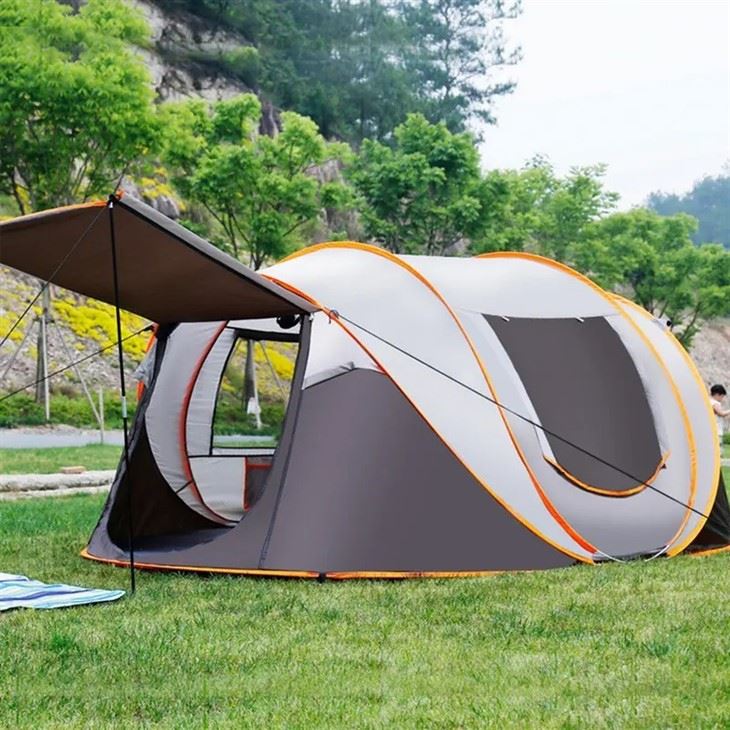
Pop-up tents are marketed as a “throw and go” style. Designed with spring-loaded poles, the tent will “pop” into shape in just a few seconds without the hassle and time of setting up a traditional tent style. This type of tent will “pop” into shape in just a few seconds.
Pros
● Quick and easy setup makes them super convenient and great to use in a pinch or on a whim.
● They are usually a less expensive style of tent.
● They come in a range of sizes from a single user to small groups.
9.Backpacking Tents
Backpacking tents are specifically designed to be carried a long distance. Backpacking tents come in many designs, but the dome tent style is one of the most common. It’s important to find a tent that withstands all types of weather, as you’re not always sure what you’ll encounter while backpacking. Backpacking tents are specifically designed to be carried a long distance.
Pros
● A backpacking tent will often be made with very high-quality materials to reduce the overall weight while remaining durable.
● They have a very low profile, which allows them to withstand any weather conditions.
● Have fewer poles and a very simple setup design that is quick to set up and take down.
10.Hammock Tents
Hammock tents are a great alternative to traditional tents. They are tied to a tree with suspended steps providing a comfortable sleep above the ground. This type of tent is tied to a tree with suspended steps providing a comfortable sleep above the ground.
Pros
● Hammock tents can provide the most comfortable way to sleep in the words.
● They are easy to set up as long as you have enough strong trees nearby.
● They are a lightweight option that is easy to carry.
11.Teepee Tents
The teepee tents were once constructed using animal skins by indigenous tribes and the structure is still used today. The single central pole, numerous guy lines, and stakes give these tents a cone-shaped structure. While they are now typically made of canvas, there are also some synthetic options available for those who want a lighter, more affordable option.
Pros
● This style of tent is typically very spacious and can be built to accommodate a large group.
● Teepee tents provide lots of livable space, taller standing space, and roof vents that allow hot air to rise and escape.
12.Canopy Tents
These tents are primarily used for festivals, carnivals, sporting events, and other places as a source of shade rather than a place to sleep. A canopy tent has 4 legs and a canopy top with open sides. This type is mainly used for events to block rain and sun.
Pros
● Easy to assemble and provides a great additional shelter to any campsite.
● They provide reliable protection from the rain and sun.
13.Rooftop Tent
Rooftop tents are installed on top of an SUV and provide an elevated sleeping space accessed by a ladder attached to the tent door or vestibule.
Pros
● Rooftop tents are typically very robust and weather-resistant
● You can camp anywhere that you can park your vehicle and don’t have to worry about any uneven ground or staking out the tent.
● Usually sold with an inbuilt mattress providing the ultimate comfort and protection keeping you away from snakes, bugs, and any other critters.
14.Bathroom Tents
This unique tent option is basically a portable privacy tent for changing clothes, taking showers, and for toilet purposes used mainly by mountaineers. It pops up quickly from a folded position and takes a little manipulation to gather it back together and pack up. This type of tent is used to provide privacy while using the bathroom.
Pros
● A great option for individual privacy when camping in large groups or in locations where privacy is hard to find.
● Easy to use, doesn’t require any poles, stakes, or extra setup time.
● A multipurpose option that can be used by several people in the group for multiple applications.
15.Wall Tents
Wall tents are also known as safari tents, outfitter tents, or canvas hunting tents. It is a tent that has four vertical walls constructed out of a heavy-duty canvas. Wall tents are great when you have large gear like for hunting.
Pros
● Designed specifically for providing offer greater space.
● Especially sturdy and gives extra protection from the elements.
● You can also use a wood stove inside this type of tent.
16.Trailer /Truck Tents
This tent is a hybrid between tent and caravan. They are towed on a trailer behind a truck or SUV and set up on-site. They provide an experience as close to a camper trailer without the significant equipment investment. This type of tent can be setup in your truck bed.
Pros
● Trailer tents are spacious, roomy, and strongly built.
● Adds the extra advantage of a sleeping platform raised off the ground
● Provide extra warmth and comfort when compared to other tent styles.
What's the Key Features for a Quality Camping Tent?
Size is the first determining feature for any tent buyer. Tents are rated by the number of sleeping bags that can fit inside, but consider storage space on top of that. A general rule to follow is number of users plus two. If you need a tent for two, take a tent for four.
Aluminium poles are more durable than fibreglass poles which have a reputation for breaking. If you're looking at a tent, check what the poles are made out of to avoid a nasty shock in the middle of the night from it suddenly collapsing.
The top of a tent is covered by a rainfly, which is water resistant, while the walls of a tent are usually only water repellent. A tent with a rainfly that drapes down over the edges is going to do a far better job of keeping you dry.
Roof and window vents are a great way to eliminate condensation during a warm night. A great feature to look for to avoid waking up amongst that horrible, humid, stale air.
Zippers are prone to breaking, easily ruining a tent and leaving it requiring repair that can't usually be done on a trip. Heavy duty zippers will last you longer; any good tent should feature them.
A tent’s pole structure usually determines how easy or hard it is to set up. Fewer poles allow faster setups. It’s also easier to attach poles to clips than it is to thread them through “continuous” pole sleeves. Many tents offer a combination of both clips and short pole sleeves in an effort to balance strength, ventilation, and setup ease.
Consider a Few Factors When Choosing a Camping Tent for Your Needs


Determine Your Space Needs
Okay, there are a lot of camping tents available. Before starting, decide how many people will sleep in the tent? Will backpacks and gear stay inside or out? And what about the dog? Determining all this will help as you choose the proper floor area and vestibules.
Consider Tent Weight
Everyone wants a camping tents that are light and spacious. The roomier the camping tent, the heavier it is. If you need a two-person tent for backpacking or bike-camping, choose one that is four pounds or less. Your back will thank you later. And if you are car camping, don't worry about the weight at all. Most camping tents list two weights: the "maximum weight" includes the tent canopy, poles, rainfly, stakes, stuff sack, and guy lines, everything you would normally carry. "Minimum weight" is everything except the stakes, guy lines, and stuff sack.
3-Season or 4-Season Camping Tents
3 season camping tents (spring, summer, fall) are lightweight and tend to be cooler in hot weather. 4 season camping tents (winter) can withstand snow and high winds. They are also heavier and more expensive (usually). Many people who camp year round have one tent for winter and another for the rest of the year.
Pick the Proper Camping Tent Floor Size
Floor area (measured in square feet) tells you the size of the camping tent. If you need extra elbow room that includes space to store gear inside, choose a camping tent that has a floor area of at least 20 square feet (give or take) per person. For those looking to shave ounces (backpackers, bike campers) a camping tent that offers about 15 square feet per sleeper will work nicely, though it will be a tight fit.
Consider Tent Height
Camping tent height is measured from the ground up to the top of the tent's exterior. To calculate interior height, subtract 2 or 3 inches from the stated "peak height." 3 ft. 6 in. is usually enough to sit up in.
Double-wall or Single-wall Design
Unlike the common double wall tents that feature a main section and rain-fly, single wall designs do away with the rain-fly. Single wall camping tents are extremely light but tend to allow more condensation, meaning the walls may dampen with your own body vapor. If you choose a single-wall camping tent, make sure that it has good venting.
Consider the Doors
While one door is of course enough, two might minimize nighttime jostling when you or your friend crawl outside to respond to the call of nature. An extra door does, however, add extra weight and cost to the camping tent.
About Wind Strength
Make sure that the rain-fly reaches the ground if you will be camping in strong winds. Also ensure that the rain-fly has plenty of tie-down points to attach stabilizing guy lines.
How Do I Properly Care for My Camping Tent?
Pick Your Camping Spot Wisely
It helps to set up your tent in a protected area instead of an exposed ridge. Your tent might get unnecessarily battered by the wind on a ridge.
Build and Stake Your Tent Properly
Tent manufacturers design their tents to withstand a windstorm and downpour, but pieces will break if they’re improperly used. A lot of snapped tent poles and ripped rain flies because users didn’t follow instructions. Please spend the extra time to double check that everything is taut and correctly inserted.
Keep Your Tent Clean
Oil and dirt will eventually ruin your tent’s waterproof fly, so when it gets noticeably dirty you need to clean it the same way you would clean your jacket. And make sure the fly is fully dry before you pack it away.
Dry Your Tent
The seam tape will peel or the polyurethane coating will break down if you store your tent when it’s wet. It’s also likely to get moldy. You’d better set up your tent at home every time you return from a trip to let it fully dry out.
Don’t Store Your Tent in a Stuff Sack
Hauling your tent in a stuff sack to a campsite is fine, but when it’s sitting in your garage, store it in a looser sack to give the materials room to breathe. The extra space also keeps the fly and seam tape from getting crimped.
Be Kind to Your Zippers
To give your zipper a little extra life, being patient if they get caught on a piece of the tent and cleaning them with a wet cloth. Cleaning your zippers will ensure dust and sand don’t eat away at the metal. Waxing the zipper track also keeps it sliding efficiently. It also prevents dust and sand from getting in.
Rinse Your Poles
The salt oxidizes your poles and eventually causes them to break. Rinsing off your poles even if you weren’t right on the beach.
Don’t Rely on Duct Tape for Long-Term Repairs
Yes, duct tape is great for a quick fix when you tear your tent on the trail, but the tape will break down and peel off over time. For a longer-term fix, Stone suggests using Tenacious Tape, which is more durable and has a stronger glue.
Ultimate Guide
Q: What is the main thing to look for when purchasing a camping tent?
Q: How do I keep my tent secure?
How do I keep my camping tent waterproof?
Purchase a waterproofing agent, and some seam sealant.
Wait for a clear, dry warm day.
Pitch the tent in an outdoor setting so there is plenty of ventilation.
Spray or paint the waterproofing agent to the outside of the tent. ...
Use a clean cloth to ensure any drips or excess waterproofing is wiped away.
Allow to dry.
Q: Why does my tent get so wet inside?
Q: Should you put a tarp over your tent?
Q: What to do if your tent leaks?
Q: Should tent stakes be straight or angled?
Q: What goes under a camping tent?
Q: What is the best shape for a tent?
Q: What do you call a tent without sides?
Q: What makes a tent durable?
Q: What can damage a tent?
Q: How do I protect my tent from wind?
Q: Can bugs get through a tent?
Q: Where should you not put a tent?
Q: Do camping tents get struck by lightning?
Q: What are the cons of a tent?